Lumamate App
Overview
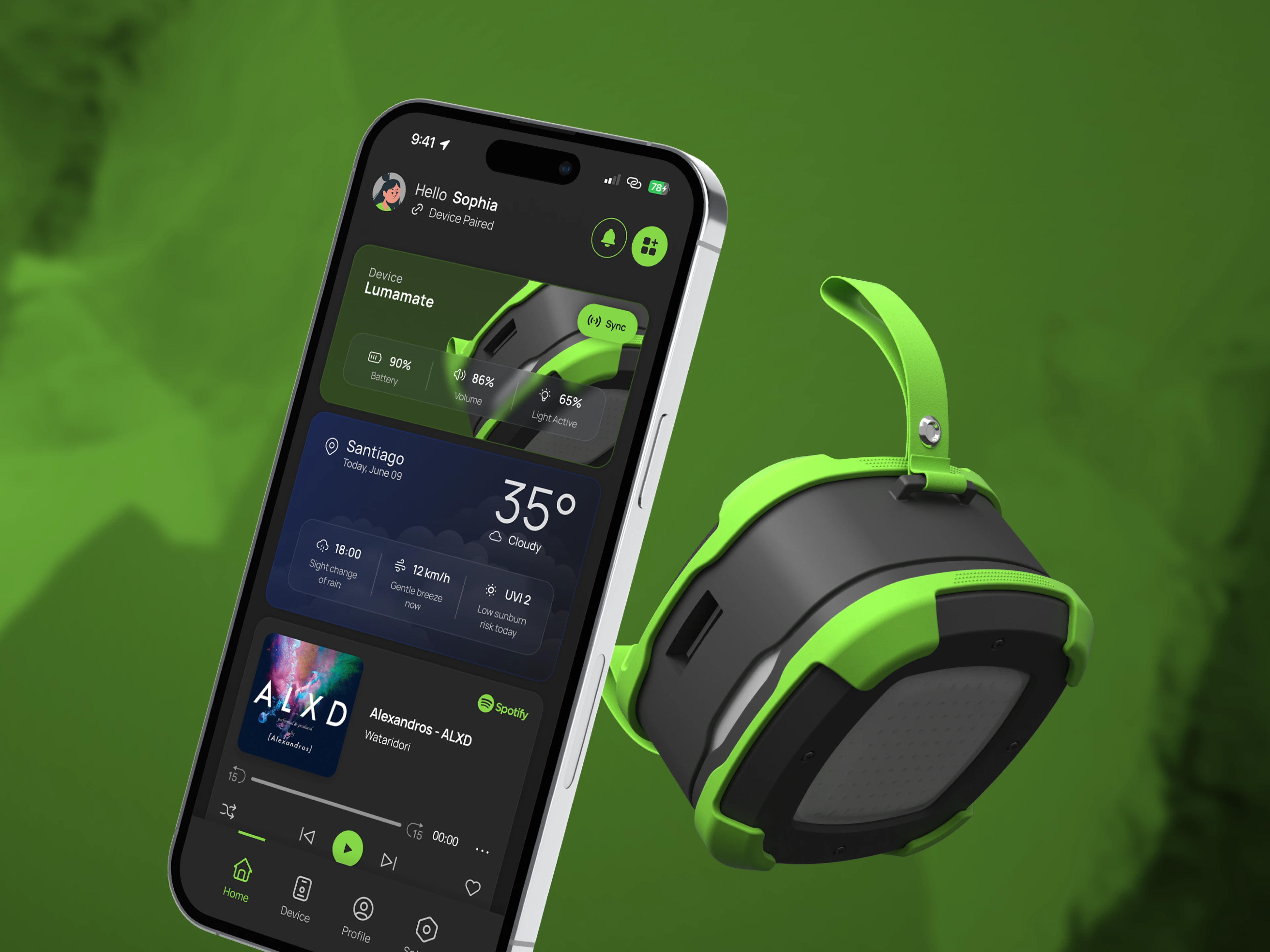
The project involved developing a smart device designed to provide electrical support, audio, and lighting in extreme situations, especially for trekking enthusiasts. This device connects to an app via Bluetooth, allowing intuitive control of all its functions.
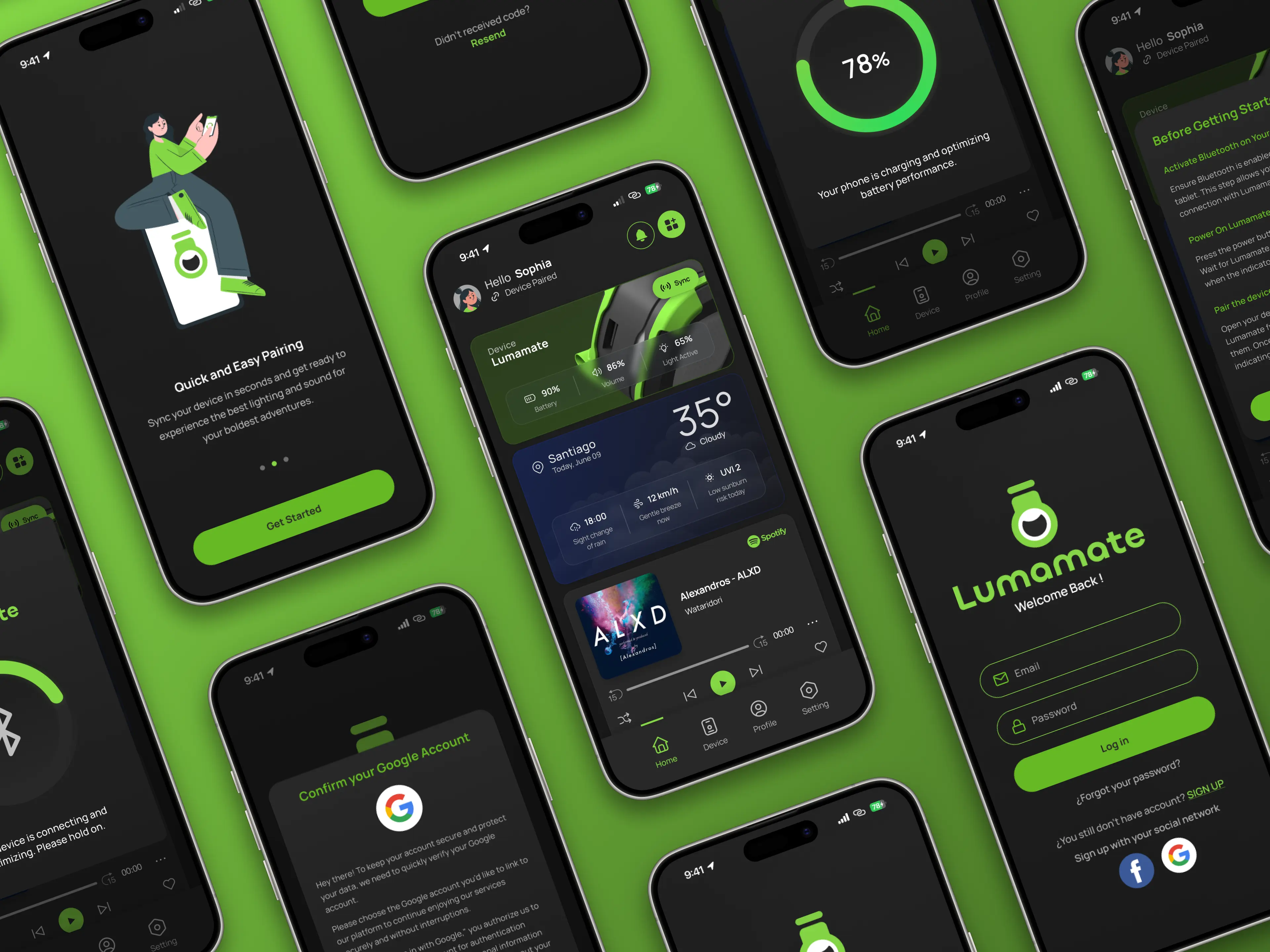
The development included creating the multifunctional device and the user interface of the app, ensuring an integrated experience for users.
Overview
Problem
Goal
Ideation
Design
Handoff
Impact
Promoting solar energy via a mobile app and portable charger
Overview
The project involved developing a smart device designed to provide electrical support, audio, and lighting in extreme situations, especially for trekking enthusiasts. This device connects to an app via Bluetooth, allowing intuitive control of all its functions. The development included creating the multifunctional device and the user interface of the app, ensuring an integrated experience for users.
Problem Statement
During the design sessions, there was a need to develop a multifunctional, compact, and portable device for maximum ease of use. Analysis of competitors showed current market devices have limited functions. Focusing on users like hiking enthusiasts and nature lovers revealed a clear opportunity. Many carry portable batteries for phones only, stressing the need for a device with more functions, especially in emergencies.
Hiking enthusiasts need a device that enhances their trail experience, providing entertainment and emergency safety. Due to their constant use of phones for these purposes, they face the issue of rapid battery drain.
Goal
The main objective was to develop a compact device that offers multiple functions and is lightweight enough for easy transportation. This device was intended to provide practical and emergency functionalities. It needed to connect to an application for remote control via mobile phones. This app had to be compatible with both mobile devices and web browsers, ensuring maximum compatibility and reaching a wide range of users.
Ideation
Como part of the conceptualization process, sketches were created to define the device's form and wireframes for the application's user interface, aiming to achieve a consistent product with a unique style. Key concepts emphasized were lightweight, practicality, innovation, and functionality. Sketch sessions were conducted to ensure the design met necessary technical requirements. Regarding the application, user flow was mapped out to visualize the case study, and user personas were developed to gain deeper insights into the target audience and their critical needs when using the device.
Design
In this phase, the design system was developed for creating the user interface, based on multiple previous iterations and validations obtained through user testing. The process included creating wireframes, user flows, and user profiles, as well as defining style palettes. For the application design, a main view was designed that integrated key functions such as audio and lighting control, along with device configuration. As for the device itself, a functional model was developed using Rhinoceros for manufacturing and ABS injection. Materials were defined, and prototypes were created for usability testing, evaluating the battery viability, speaker quality, and integration with the application.
Handoff
Finally, construction blueprints of the device, product renders, and mechanical details were provided to facilitate its manufacturing. For the application, a design system was provided that included typographic scales, icons, and all necessary graphic resources. Views and style variables were provided to developers for implementing the application. Lastly, usability tests and application configuration were conducted with the device.
Impact
The project had a significant positive impact by providing users with an integrated solution that precisely met their specific needs. The designed interface not only enhanced ease of use but also facilitated quick adaptation to the device and its unique functionality. Furthermore, the device design effectively minimized concerns regarding weight and size, ensuring easy portability in bags and backpacks without unnecessary bulk. This user-centered approach not only optimized the hiking enthusiasts' experience but also proved to be a practical and effective solution for enhancing their outdoor adventures.