Moya Platform
概要
このプロジェクトでは、Moya Customs Agencyのためのプラットフォームを実装し、チリでの運用を手作業からデジタルに変革しました。主要な課題は、コンテナ登録を自動化して作業負荷を軽減することでした。
様々な分野の作業員とのインタビューを通じて、バリューチェーンの改善点を特定しました。
実装はFirebase、Next.js、Reactを使用し、プロセス自動化のためにUiPathを統合しました。これにより、コンテナの登録と追跡の両方が最適化され、効率が向上し、日々の業務が容易になりました。
概要
問題
目標
アイデーション
デザイン
引き渡し
影響
Optimizing customs processes for automatic container registration
Overview
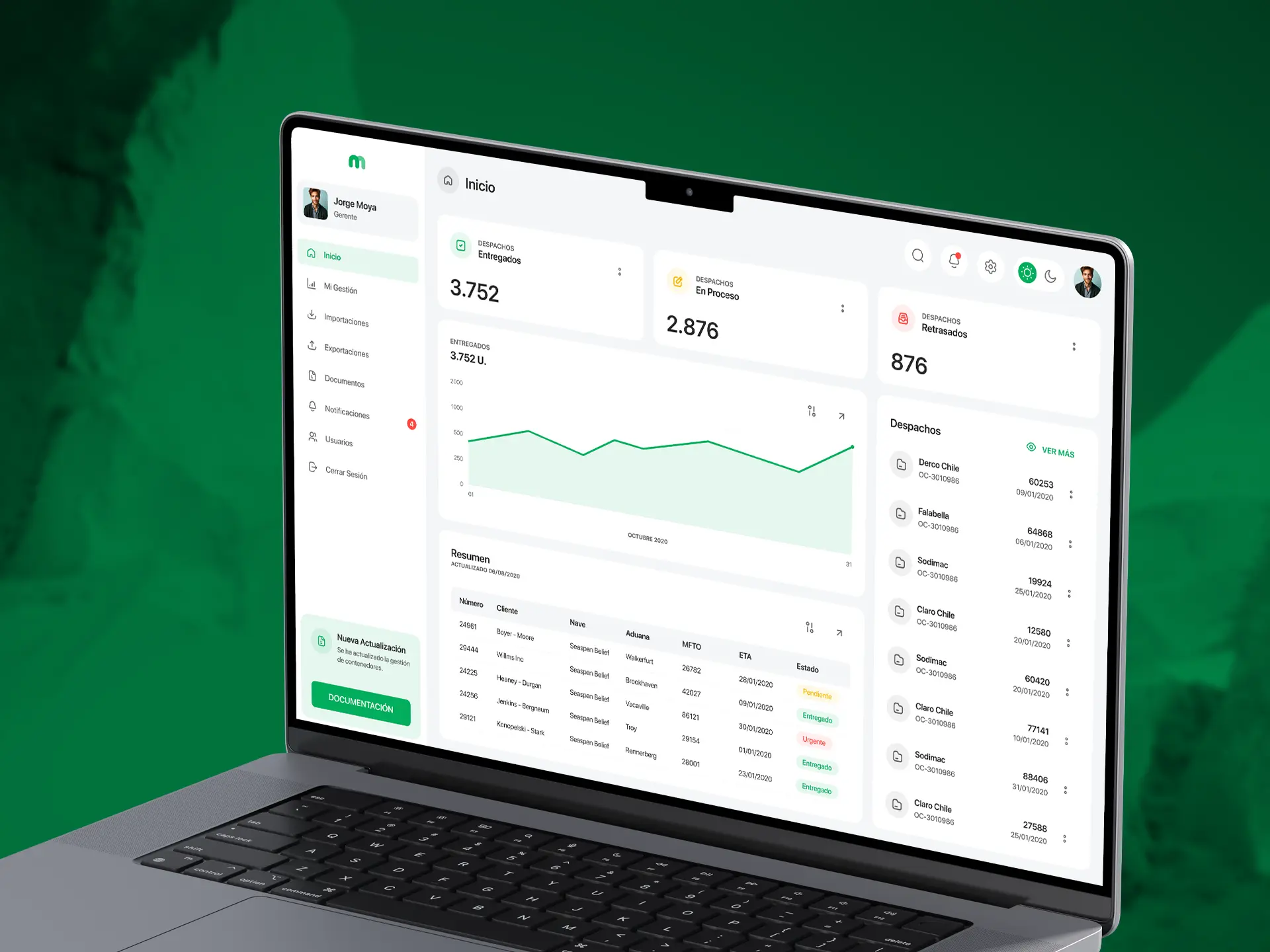
The project involved implementing a platform for the Moya Customs Agency, transforming its operations in Chile from manual to digital. The main challenge was automating container registration to reduce the workload. Research was conducted through interviews with workers from different areas to identify improvements in the value chain. The implementation was done using Firebase, Next.js, and React, integrating UiPath for process automation. This optimized both the registration and tracking of containers, improving efficiency and facilitating the agency's daily work.
Problem Statement
The findings revealed significant issues in the operations area. Users relied on manual processes and outdated data, leading to inefficiencies in the workflow. Once the main problem was identified, design thinking activities were conducted to better understand user needs and requirements. This included creating user personas and mapping the activities performed to identify pain points and improve the workflow.
Employees need a digital solution that optimizes container registration, as the current manual process causes delays and potential errors in records.
Goal
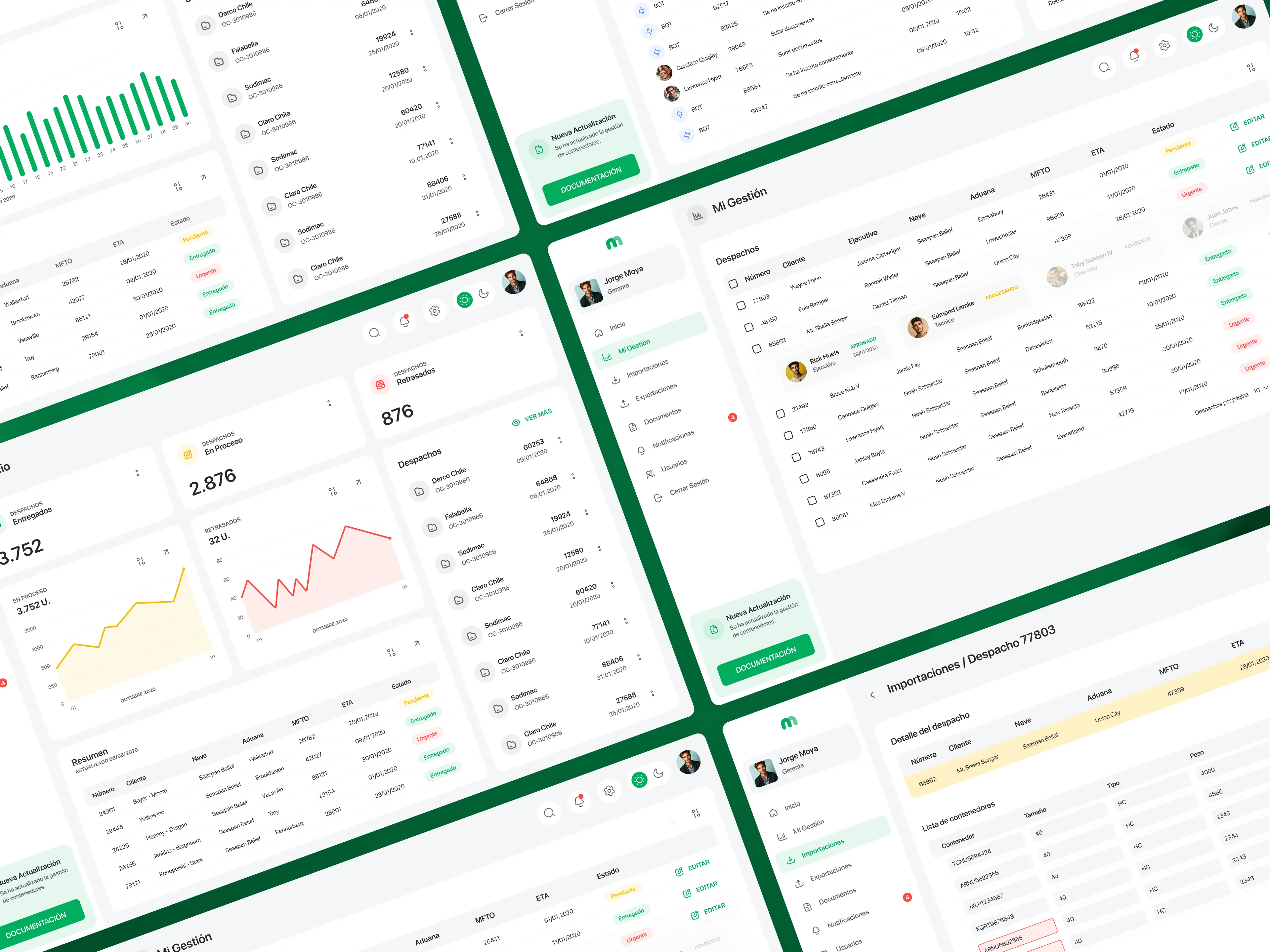
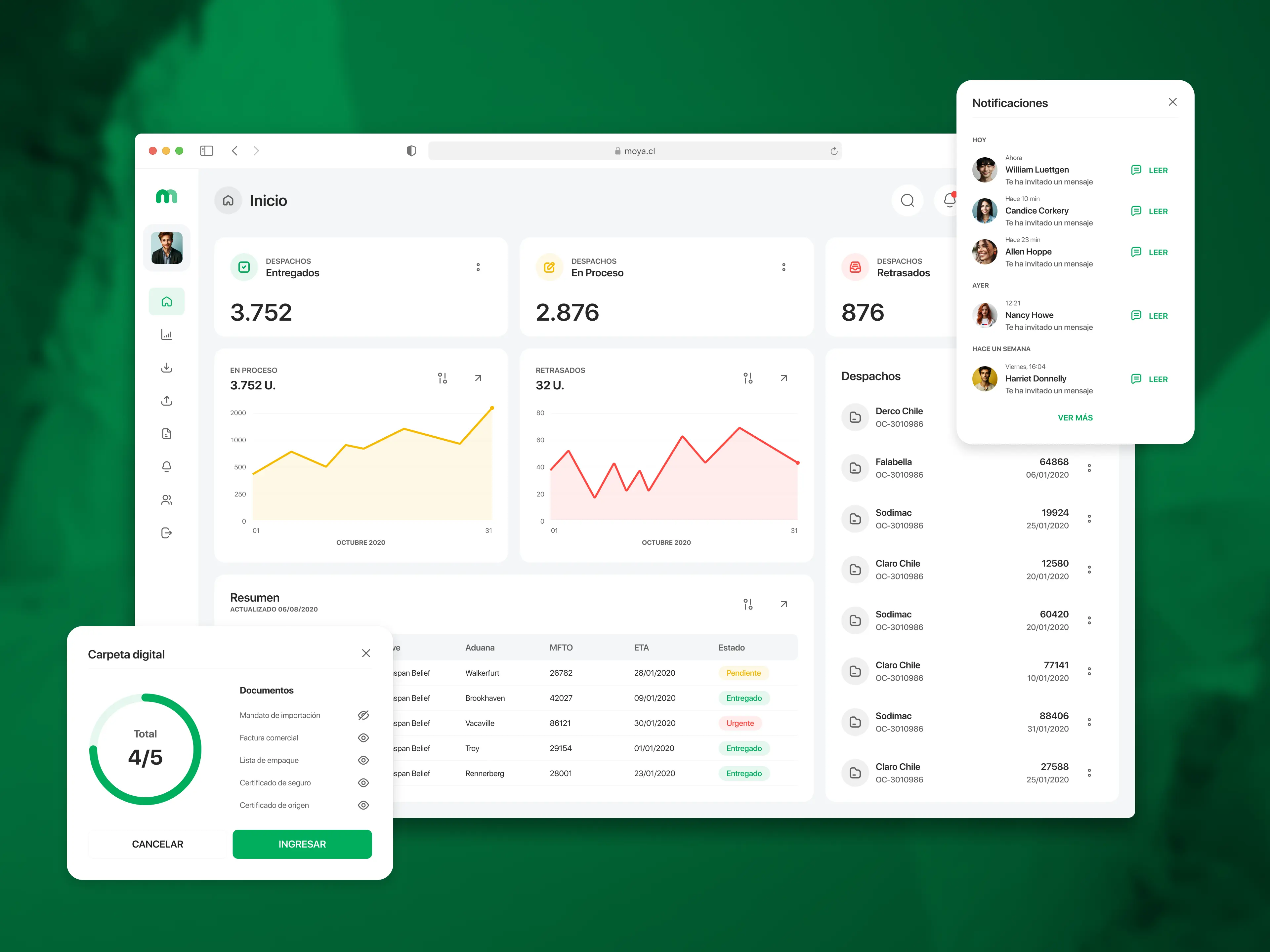
The goal was to create a cloud platform using Next.js, React, and MongoDB that integrated management, container registration, and document storage. UiPath was used to automate container handling. The design focused on simplifying manual processes. The platform allowed real-time visibility of records, task assignment by area, notification sending, and import management. Additionally, it prioritized the ETA of records, improving the visibility of urgent tasks.
Ideación
In the ideation phase of the platform, a user flow of the operations across all areas was created to highlight key points and relevant functionalities that would impact users' work. Next, the information architecture was defined to understand the user's navigation flow. Finally, various wireframes focused on the main functions were developed, allowing us to test how the layout of the information would be presented. By exploring different visualization alternatives, the development was segmented into a work backlog, facilitating asynchronous collaboration with the development team. This synergy enabled us to progress efficiently, aligning development with the identified needs.
Design
During the design development, several versions of the platform layout were created in Figma, organized by areas and functions. The focus was on the registration and tracking of containers, as this information was key for users. The design was kept simple to facilitate the adoption of the new platform. A system of email notifications was also implemented to inform about the registration of containers. This improved communication between users and clients and provided backup data in Excel for more efficient management. The functionalities were reflected in prototypes that were tested by users before the final development. This collaborative approach allowed the team to progress with a clear vision centered on user needs, resulting in an intuitive and effective platform.
Handoff
In the final stages of the design, each sprint focused on developing a specific functionality, ensuring scalability and process accumulation. This work was captured in the design system, guaranteeing consistency and coherence across the platform. This facilitated the organization and tracking of the project's progress, allowing stakeholders to monitor the evolution of features and functionalities. As part of the handoff, all high-fidelity prototypes and views were developed. The design system and components based on MUI 5 were completed, and the platform components were thoroughly documented. This documentation provided a valuable guide for the development team, ensuring that the project remained aligned with the needs and expectations of users and stakeholders.
Impact
The implementation of the platform had a significant impact on operations efficiency and productivity. Overall, work times were reduced by 30%, resulting in a substantial improvement in team responsiveness and overall performance. However, it was the operations area that experienced the greatest benefit. Previously, work in this area was entirely manual, limiting the staff's ability to handle large volumes of container registrations. With the introduction of the bots, the number of registrations increased significantly, drastically reducing operator work times. This allowed operations staff to focus on other tasks that they previously couldn't address due to time constraints. In summary, the platform not only improved operational efficiency but also freed up human resources for more strategic and productive activities.